How to Import EML Files into Thunderbird
Quick Answer: You can import EML files into Thunderbird by dragging and dropping EML files into Thunderbird folders, by using add-ons like ImportExportTools NG for larger or organized EML imports. Also, you can use a dedicated EML to Thunderbird converter for bulk migration.
This guide discusses each method in detail including how to import multiple EML files, how to retain attachments, how to troubleshoot common issues and how to verify the imported emails.
Which Thunderbird Version Do You Have?
Check your Thunderbird version before importing EML files.
For a few EML files, the normal Thunderbird drag-and-drop flow will usually work. You don’t need to install an add-on to open individual EML messages.
ImportExportTools NG also has dedicated EML/EMLX import options, if you have a larger collection, especially if your EML files are in multiple folders. The current version, 15.0.3, supports Thunderbird 140 through 157 and offers EML/EMLX import.
Choose your method based on your situation:
| Requirement | Recommended Method |
|---|---|
| Open or import a few EML files | Drag and drop |
| Import multiple EML files | Drag and drop or ImportExportTools NG |
| Import EML files from folders | ImportExportTools NG |
| Preserve a large EML collection | Dedicated EML converter |
| Import selected EML messages in bulk | EML converter with filtering |
Method 1. Import an EML File into Thunderbird Using Drag and Drop
If you only have a few EML files, dragging them directly into a Thunderbird folder is the simplest approach.
Steps to import EML files into Thunderbird
- Open Mozilla Thunderbird on your system.
- Now, Click on Local Folders.
- Right-click on Local Folder and choose New Folder.
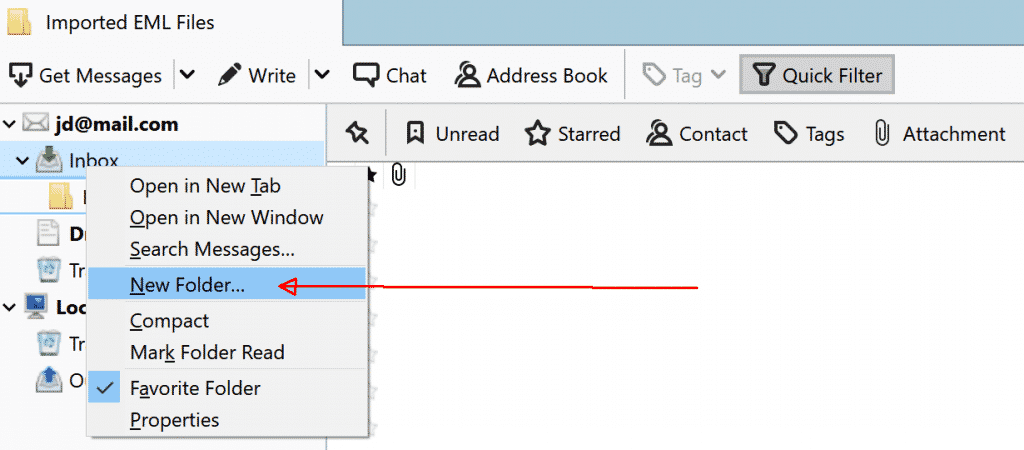
- Give the folder a name and select OK.
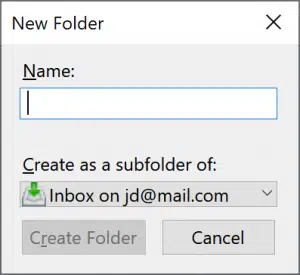
- Select the newly created folder.
- Choose the EML file that you want to import into Thunderbird.
- Drag and drop the selected EML file into the newly created folder.
Can you import multiple EML files at once in Thunderbird?
Yes. If your OS allows you to select multiple EML files, you can select them and drag them into a Thunderbird mail folder. This is useful for a small number of files.
But dragging hundreds or thousands of EML files manually can be inconvenient. And it doesn’t have the folder management and filtering options you get with specialized import tools.
Method 2. Import Many EML Files with Subfolders Using ImportExportTools NG
If you have a lot of EML files, or you want more control over the import, ImportExportTools NG is a useful Thunderbird add-on.
The add-on offers import capability for EML and EMLX files. Import can be performed for single files or from a directory.
Step 1 Install ImportExportTools NG Open Thunderbird.
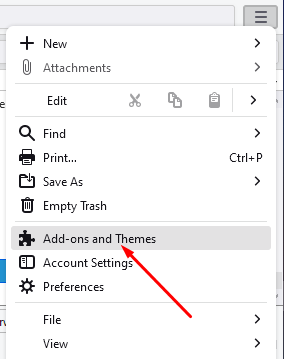
- Click Menu.
- Choose Add-ons and Themes.
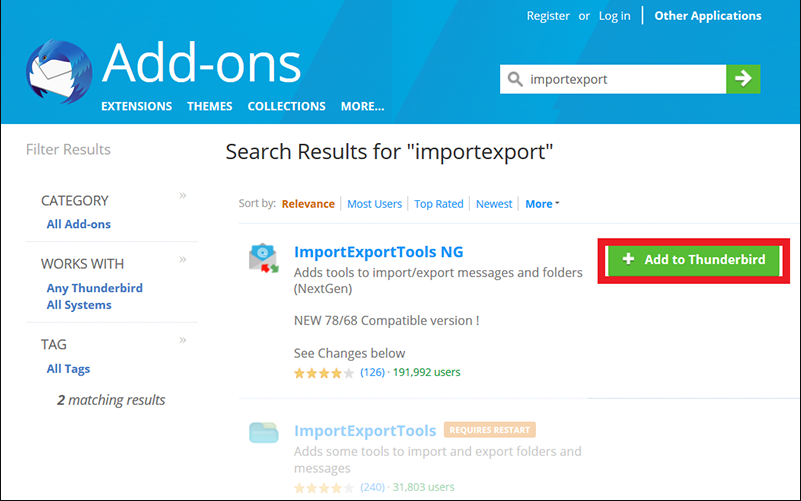
- Search for ImportExportTools NG
- Choose the add-on and click Add to Thunderbird.
- Finish the installation
Thunderbird compatibility changes between releases. Use the current compatible release, not an old version. The latest version of the add-on release is . 15.0.3 .
Step 2: Create a folder in Thunderbird
- Right click on Local Folders and choose New Folder.
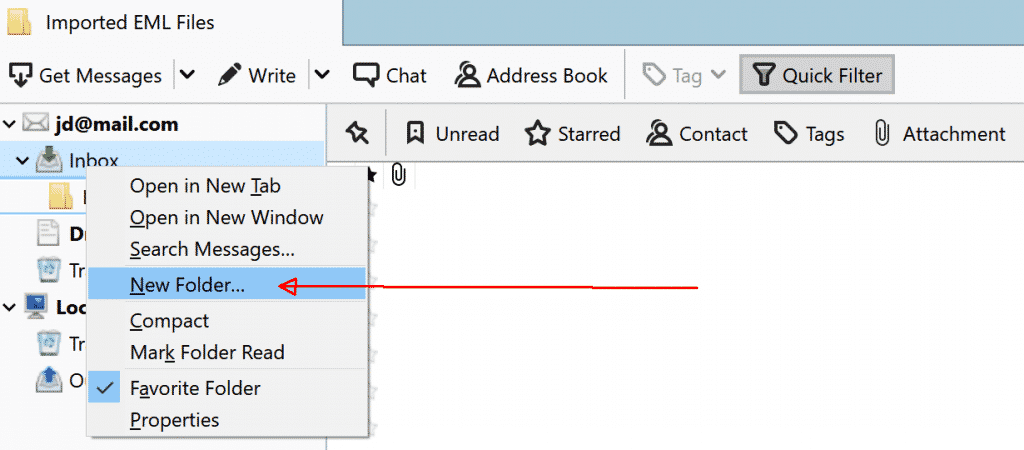
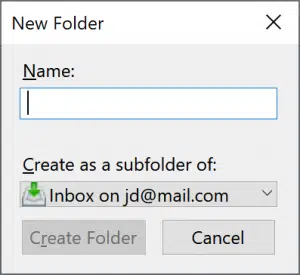
- Enter a name, for example EML Import.
- Click on Create Folder.
Step 3: Import EML files
- Right click the destination folder.
- Open the ImportExportTools NG Menu.
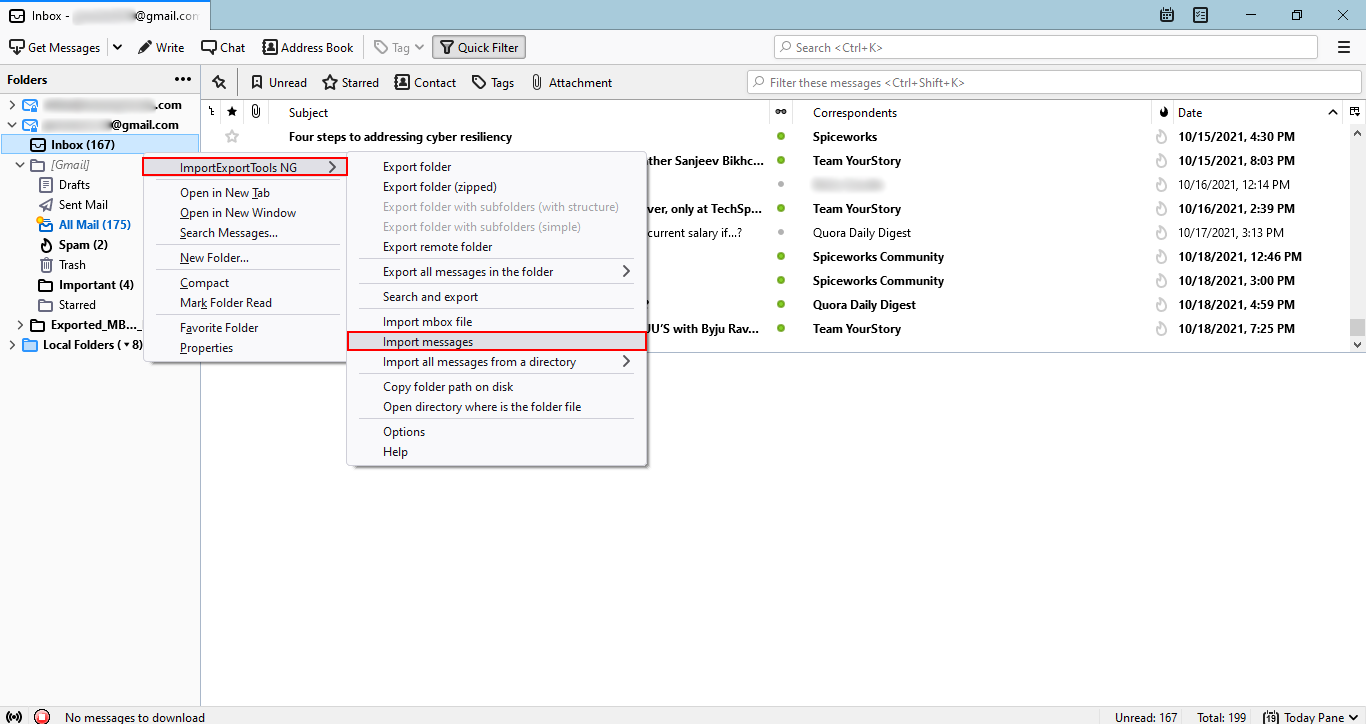
- Select the option that allows you to import EML/EMLX files.
- Open the folder containing your EML files.
- Choose the files or folder you want.
- Initiate import process.
After the import finishes, open the destination folder and check several messages.
Method 3: Going the Other Way: Convert EML to Thunderbird in Bulk
If you have hundreds or thousands of EML files, you may not find it convenient to manually import them. A different EML to Thunderbird converter can be used to process a bulk amount at a time.
For instance, if you want to choose an EML folder, preview messages, apply filters, and move emails to Thunderbird, you can use Advik EML Converter.
This helps if:
- You have multiple EML files.
- EML files are stored in separate folders.
- You want to choose selective messages.
- You want to add attachments or not.
- You want to review emails before migration.
- Want to preserve existing folder structure.
Just, tap on the FREE download button and analyze its working process.


Steps to Import EML to Thunderbird Mail App
Step 1. Launch the software and click Select Files.
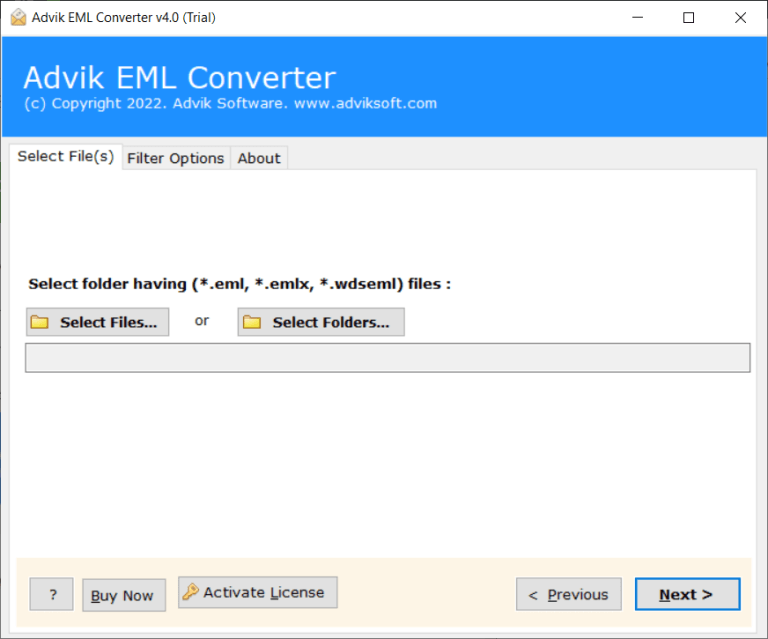
Step 2. Choose the EML folder and tap on the Next button.
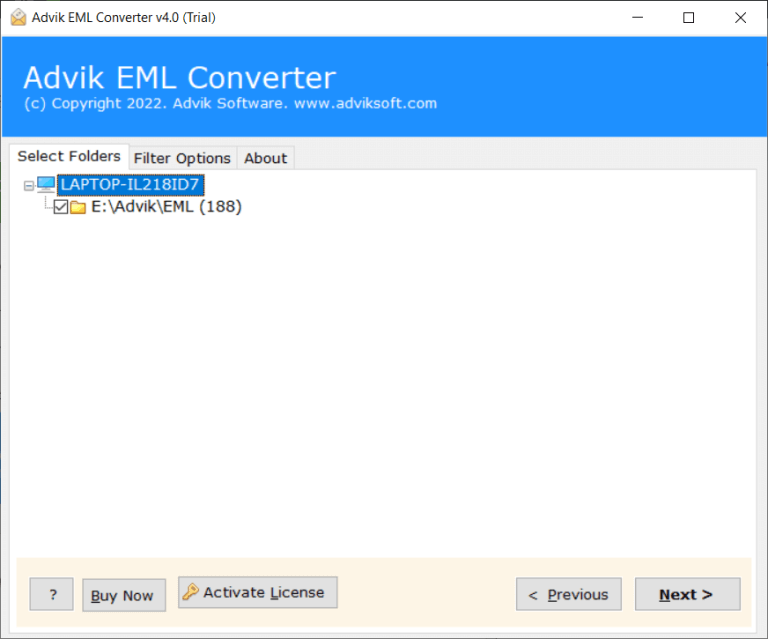
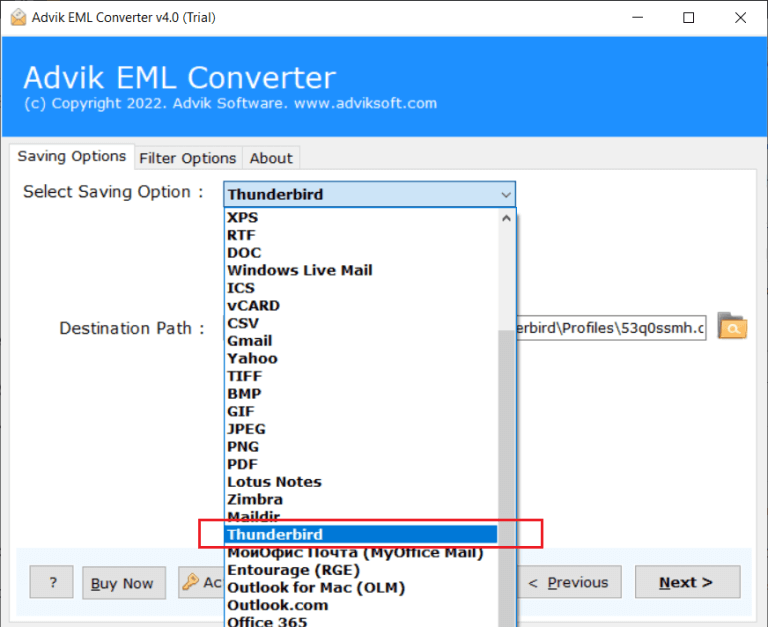
Step 3. Select Thunderbird as a saving option from the list.
Step 4. Click the Convert button to start the process.
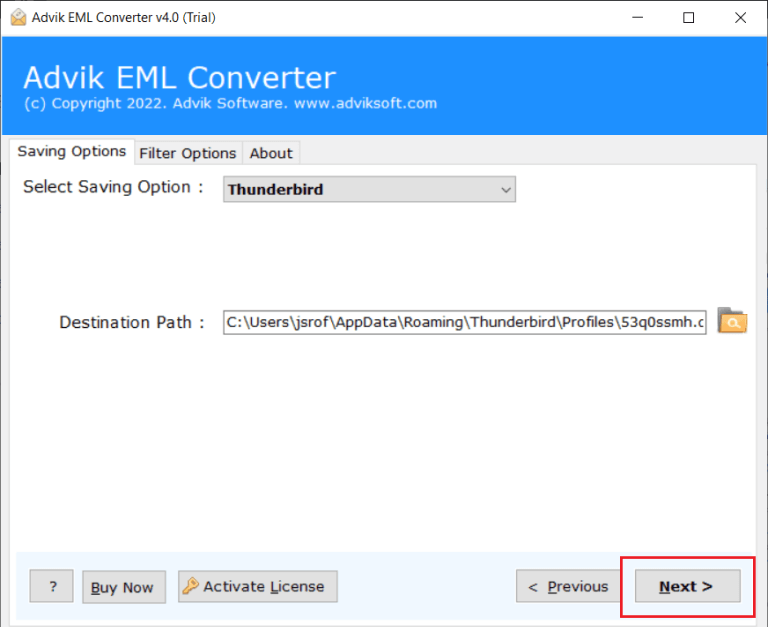
The software will immediately start copying emails from .eml files to Thunderbird client.
Check the Result After Importing EML to Thunderbird
Do not delete original EML files immediately after import.
Instead, open Thunderbird and look at a few of the imported messages from different parts of the collection.
Check these off:
- Subject: Is the original subject shown correctly?
- Sender and recipient: Review the From, To and CC fields.
- Date: Verify that the date of the original message is displayed properly.
- Message body: If the message is available in both HTML and plain text, open both of them.
- Attachments: Open attachments to confirm that they can be accessed.
- Folders: Make sure messages are imported into the right Thunderbird folder.
- Message count: Check imported email count against original EML collection.
It is a good idea to test a few messages first to make sure there are no import problems before deleting the original eml files.
Watch Video Tutorial
Common EML Import Problems and Fixes
| Problem or Error | Possible Cause | What to Do |
|---|---|---|
| EML file does not open | File association or malformed EML file | Open Thunderbird first and import the EML into a mail folder. |
| Drag and drop does not work | Incorrect destination or unsupported drag action | Create a folder under Local Folders and try again. |
| Only some EML files are imported | Some files may be damaged or incompatible | Test the problematic EML files individually. |
| Attachments are missing | The EML message or import method did not preserve the attachment correctly | Open the original EML and compare its attachment with the imported message. |
| ImportExportTools NG option is missing | Add-on is not installed or is incompatible with the Thunderbird version | Check the installed add-on version and Thunderbird compatibility. |
| Imported messages appear in the wrong folder | Incorrect destination folder selected | Create a dedicated Thunderbird folder and repeat the import. |
| Multiple EML files are difficult to manage | Large number of files or complex folder structure | Use ImportExportTools NG or a dedicated EML converter. |
Frequently Asked Questions
Q1. Does Thunderbird maintain attachments when importing EML files?
Ans. Yes, when you import EML files into Thunderbird, it keeps all attachments and other email components intact, so nothing will be lost during the import.
Q2. How to import EML files to Thunderbird without importing them one by one?
Ans. If you have a small number of messages, select several EML files and drag them to a folder in Thunderbird. ImportExportTools NG can import EML/EMLX files from a folder for large collections. A specific EML converter provides a bulk migration workflow.
Q3. What if ImportExportTools NG no longer works after an update of Thunderbird?
Ans. First, verify whether the add-on version you installed is compatible with your version of Thunderbird. ImportExportTools NG is in active development; version 15.0.3 was released September 4, 2026 and supports Thunderbird 140–157.
Q4. I can’t drag and drop EML files into Thunderbird.
Ans. Make sure you are dropping the EML files into a mail folder under Local Folders and not directly onto an IMAP folder or account. You can fix this problem by creating a new folder under Local Folders and drag the EML files in it.
Q5. Do I need ImportExportTools NG to import EML files to Thunderbird?
Ans. No. If you have a few EML files, you can import them by dragging them to a folder under Local Folders. ImportExportTools NG is handy when you need particular EML/EMLX import features, such as importing files from a directory.