How to Import OST to Gmail Account: 2 Methods
Quick Answer: Gmail cannot open an OST file. If the Outlook account still works, add Gmail to the same Outlook by IMAP and drag the folders across. If the account is gone (an orphaned OST), Outlook cannot open it either; an OST-to-Gmail tool reads the file directly and uploads the folders to Gmail, no Exchange login needed.

Is the Outlook account still connected?
If you still have access to the original mailbox, then the best method to import an OST file into Gmail is.
- Outlook account is working: Copy accessible emails and folders from Outlook to your Gmail account. This is the free way, and the only drawback is that moving large mailboxes can be time-consuming.
- Only OST file is available: If you can’t access the original profile or server account, go for an OST to Gmail tool that lets you add the file as a standalone file.
- You require a PST file instead: Follow a supported Outlook or Google migration workflow and convert the OST to PST using a supported converter.
| Your situation | Recommended method | Main limitation |
|---|---|---|
| Original Outlook mailbox is accessible | Outlook with any IMAP based email account |
Requires working mailbox access and synchronization |
| Orphaned OST file | Direct OST to Gmail import tool | Requires compatible software |
| Need an Outlook compatible backup | Convert OST to PST | Conversion and Gmail import are separate steps |
| Need to migrate multiple OST files | Batch migration tool | Verify the selected folders and destination account |
Method 1: How to open an OST file in Gmail (Free Workaround)
If you still have access to your original Outlook mailbox, you may be able to migrate its emails to Gmail without exporting an OST file first. This method copies the available mailbox content to Gmail through Outlook.
Before you start: Make sure you are able to sign in to your original Outlook account and your Gmail account. Use an Outlook version that supports both accounts and the required IMAP features.
How to do it, stage by stage
Step 1. Open Outlook and open the source mailbox.
Start Outlook and make sure your original mailbox and your folders are showing. Open a couple of emails to make sure that the content and attachments open.
Step 2. Add Gmail to Outlook
In Outlook, go to Account Settings and select add an account.
Enter your Gmail address and complete the sign in and authorization process for Google. Your organization may control the account and require administrator approval.
Step 3. Wait for the Gmail folders to sync.
When Gmail shows up in Outlook, expand Gmail’s mailbox in the Folder Pane. Ensure that destination folders are visible before copying any messages.
Step 4. Choose the emails or folders you want to move.
Select the messages or folders you need from the original Outlook mailbox. You can try the transfer with a small folder to see if it does what you expect.
Step 5. Drag your selected content into Gmail.
Drag the messages or folders you have selected to the destination you want in your Gmail mailbox.
If you are unable to drag the folders or the structure is not preserved, create the destination folders in Gmail and copy the messages in smaller batches.
6. Wait for the synchronization to complete.
When syncing messages, keep Outlook running and connected to the Internet. It may take a long time for large mailboxes. A completed drag and drop does not mean that every message has already reached Gmail.
Step 7. Go to Gmail in your browser.
Visit Gmail and examine the destination folders or labels. Open a few of the transferred emails and view the contents and attachments.
Method 2: Import an orphaned OST file to Gmail without Outlook
If your Outlook account has been deleted, the Exchange server is unavailable, or you only have an old OST file, the manual method may not work. In that situation, you need a tool that can read the standalone OST file and transfer its contents to Gmail.
AdvikSoft provides an automated tool for this workflow. Try, Advik OST Converter to transfer old, orphaned, corrupted or any type of OST file into Gmail account in simple steps.
Visit the Advik software page for more info on product details.
You can also avail a free trial here;


How to upload an OST file to Gmail
Step 1. Download and install the suggested software on your Windows computer.
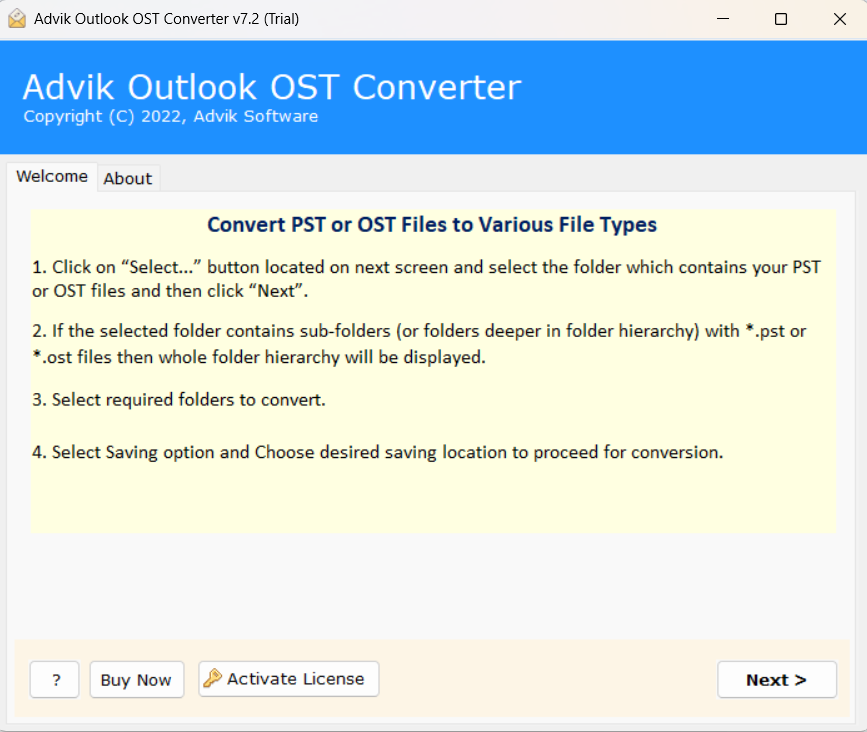
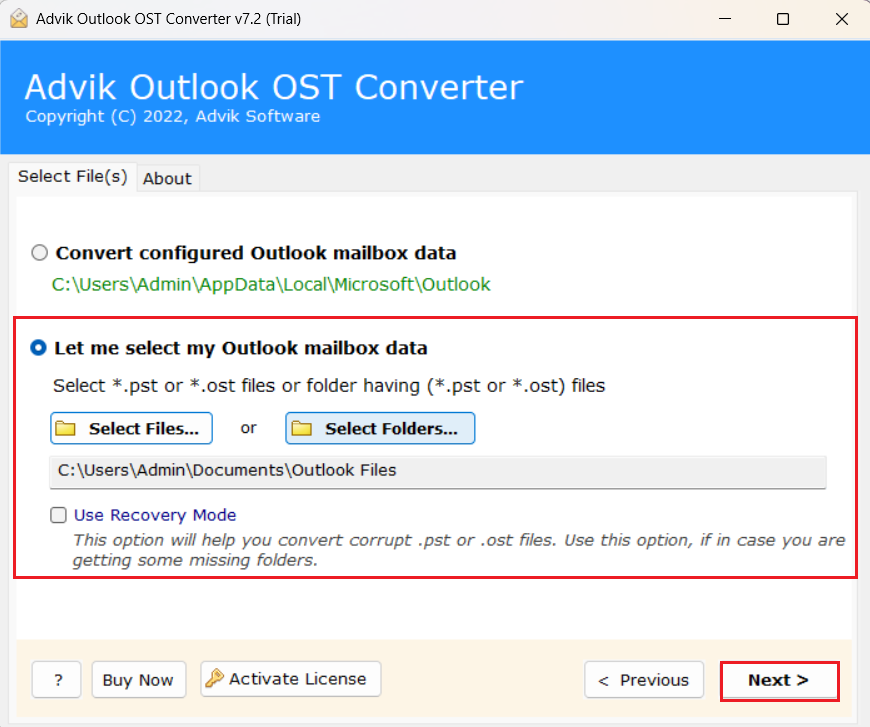
Step 2. Open it and choose the option to add an OST file. Browse to the file’s saved location and load it.
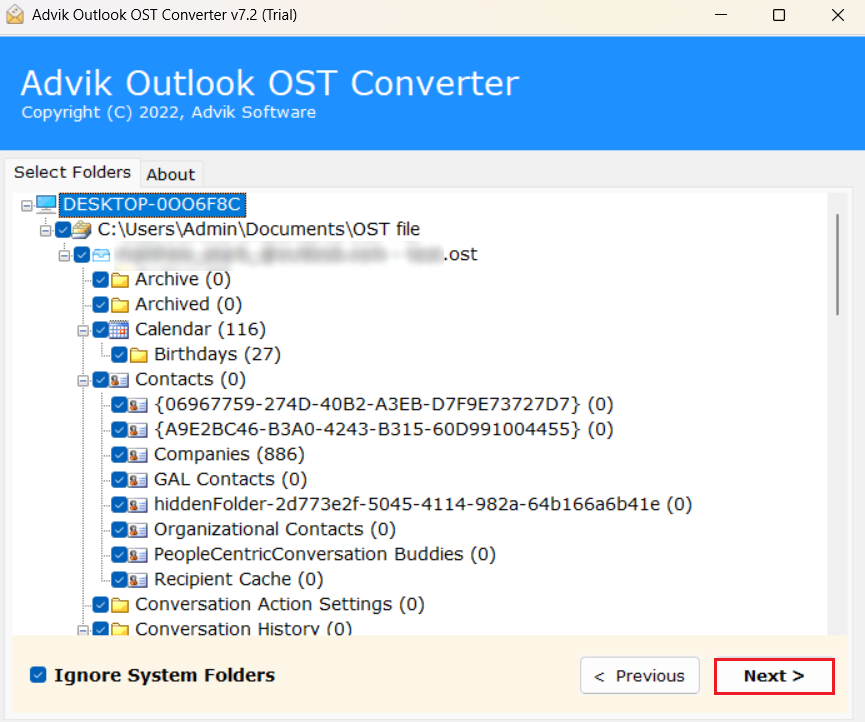
Step 3. Review the folders displayed by the software and select the emails or folders you want to transfer.
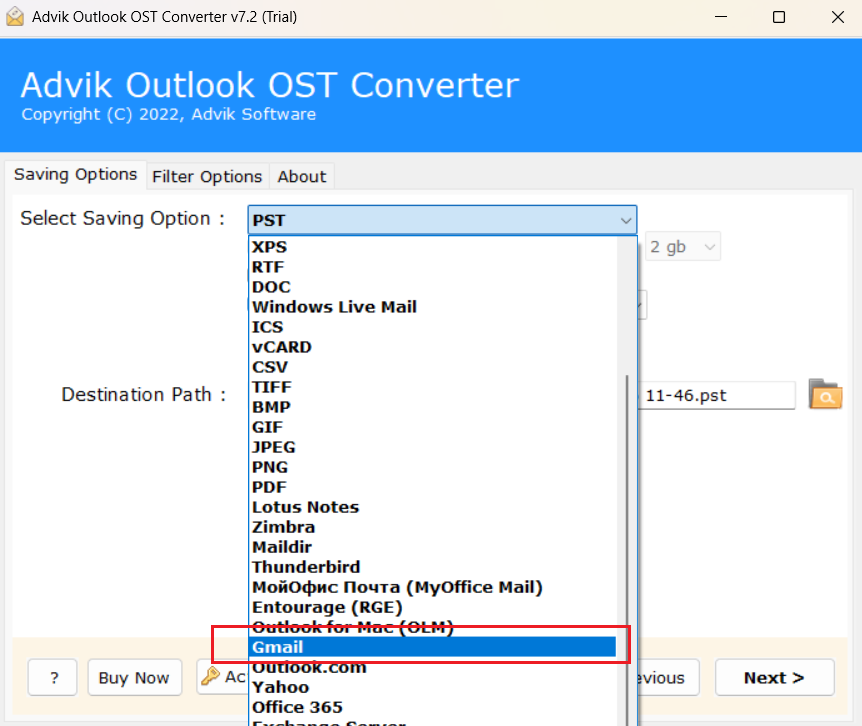
Step 4. Select Gmail from the available saving or migration options.
Step 5. Enter your Gmail address and follow the supported sign-in and authorization steps.
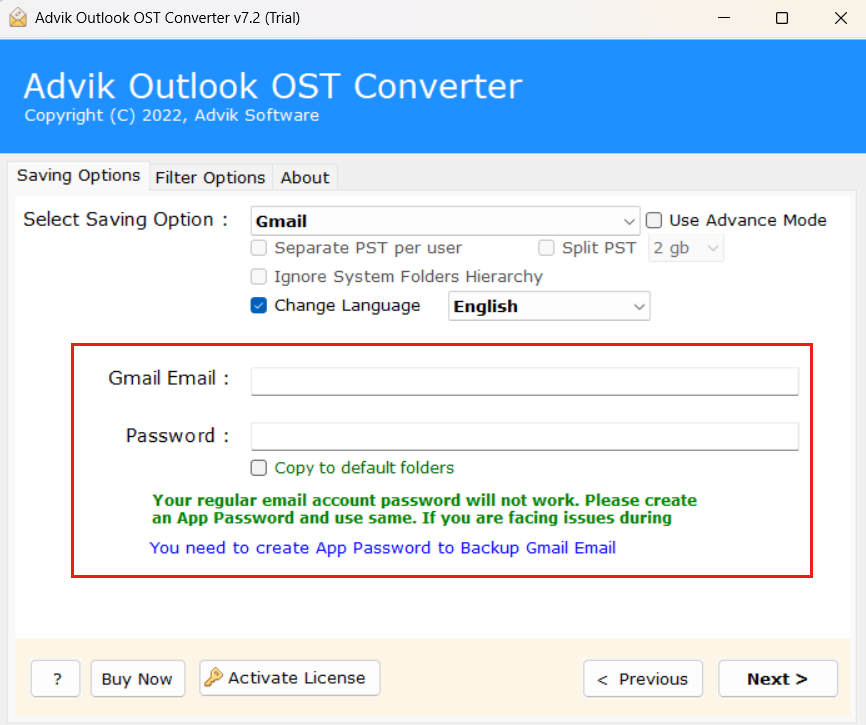
Step 6. Review your selected folders and destination settings, then click Next to start the transfer.
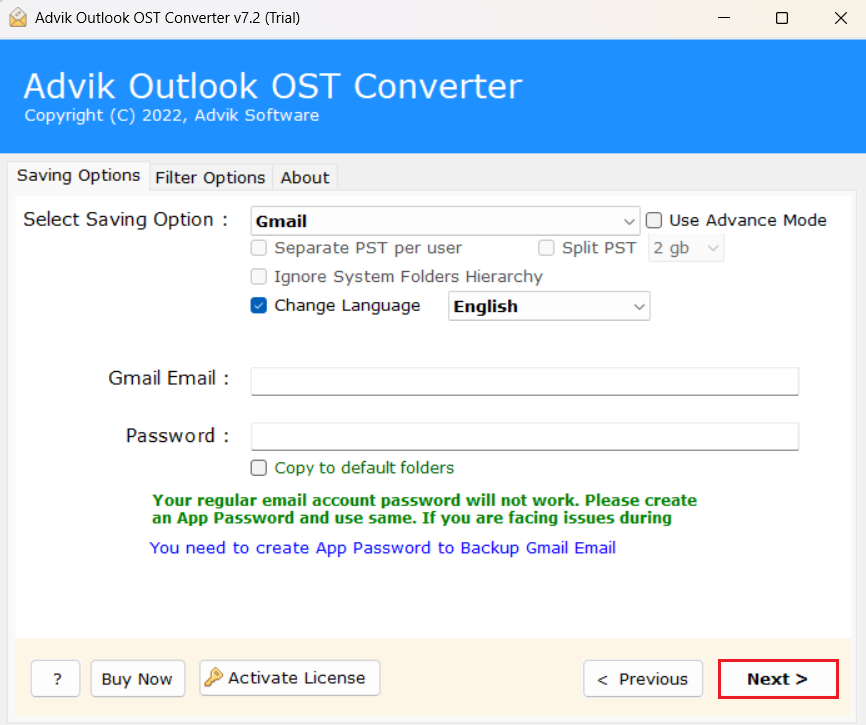
Note: Keep the computer and internet connection available until the operation finishes.
Once completed! the software will pop-up a log text that will consist all the details of the email migration process from our OST file to Gmail account.
Now, Open Gmail in your browser, locate the imported folders or labels, and inspect several messages. Check the message dates, sender information, attachments, and folder organization.
Check the result after importing OST to Gmail
The fact that the software or Outlook says the operation is complete does not mean a migration is complete. Before deleting or modifying the source data, check the destination mailbox.
Here is a check list:
- Folder structure: Verify that the expected folders or Gmail labels are there.
- Message counts: Compare the counts for source and destination for each folder where applicable Handle differences arising from threading, duplicate handling, filters, or unsupported items.
- Email Content: Open messages from the various folders and inspect the sender, recipient, subject, date, and body.
- Attachments: Open several messages with attachments and check the files for availability and accessibility.
- Older emails: Look at messages from different date ranges, focusing on the oldest and the most recent ones.
- Duplicate messages: If you retried a transfer or migrated the same data more than one time, check for duplicates.
- Migration status: Check for skipped or failed items in the software completion message or available logs.
Common problems and fixes
| Problem or message | Possible cause | What to do |
|---|---|---|
| Gmail is not recognizing OST file | Gmail does not support direct OST uploads | Use Outlook with an accessible mailbox or an OST supported migration tool. |
| Outlook cannot open the OST file | The original profile or server connection may be unavailable, or the file may be damaged | Check the original account and profile; if unavailable, try a compatible OST recovery or OST viewer option. |
| Gmail sign-in or authorization fails | Incorrect account, interrupted sign-in, or security restrictions | Retry sign-in, check the selected account, and review any administrator restrictions. |
| Some folders or emails are missing | Incomplete synchronization, unselected folders, or unsupported items | Review the selected folders, migration logs, and synchronization status. |
| Attachments do not appear as expected | The message may not have transferred completely, or the item may not be supported | Open the source and destination messages and retry the affected items. |
| Duplicate emails appear | The same folders may have been migrated more than once | Identify duplicate batches and avoid repeating the full migration unnecessarily. |
Start with one folder or a small batch for a large mailbox. When you are satisfied with the results, proceed with the other folders. Retain the original OST file or another backup until you feel confident in the migration.
Frequently asked questions
Q1. Can you import an OST file into Gmail directly?
Ans. No. Gmail doesn’t have a native option to upload and read an OST file. You must migrate the messages via a supported mail client or a compatible migration tool.
Q2. Can I import an OST file to Gmail if the file is larger than my available Gmail storage?
Ans. Not completely, unless you have enough space available in your Google account to store the incoming emails and attachments. Before you start migrating, check your Gmail storage. If there’s not enough room, free up some room or upgrade your Google storage plan and try the transfer again.
Q3. Why are some emails missing after importing OST to Gmail?
Ans. Some folders were not selected some emails may be missing since synchronization is not complete or or some things could not be moved. Check migration status. Compare number of source and destination folders. Open Gmail and verify synchronization is complete. If you are still missing some emails, go back and try specific folders or messages, rather than doing the whole migration again.
Q4. Can I import a damaged or corrupted OST file into Gmail?
Ans. It is contingent upon how corrupt the file is and if you are still able to read the file contents. Select a suitable OST recovery or conversion tool. Review the messages that have been recovered and then export the messages. There is no method which will recover all the items in a badly damaged file.
Q5. Is the manual OST to Gmail method free?
Ans. If you already have Outlook installed and a Gmail account, then you may avoid having to purchase a separate migration tool, but it require access to original mailbox for syncing.