How to Export Outlook Calendar to Excel Spreadsheet?
Summary: If you want to export Outlook calendar to Excel, the easiest method is to use the classic Outlook desktop and export the calendar as a CSV file. Go to File -> Open & Export -> Import/Export -> Export to a file -> Comma Separated Values, select your Calendar folder and set the date range. You can then open the CSV file directly in Excel. If you only have PST file that contains Outlook mailbox data, you can use a PST Converter to extract calendar data into a spreadsheet-compatible format.

Exporting Calendar from Outlook to Excel helps in scheduling your events and makes it’s easy to transfer and access it on any system. Additionally, creating an Excel file of Outlook calendar data serves as a backup copy of important events. In this guide, we will explain the two best ways to convert your Outlook calendar to Excel.
How to Export Outlook Calendar to Excel?
Outlook has a feature that allows you to easily export calendar from Outlook to Excel CSV files. Let’s understand how to use it:
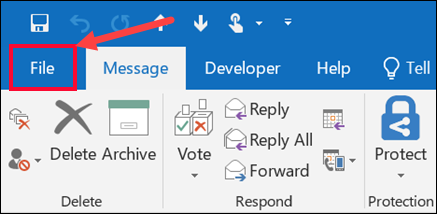
Step 1. Open MS Outlook on your system and go to the File tab.
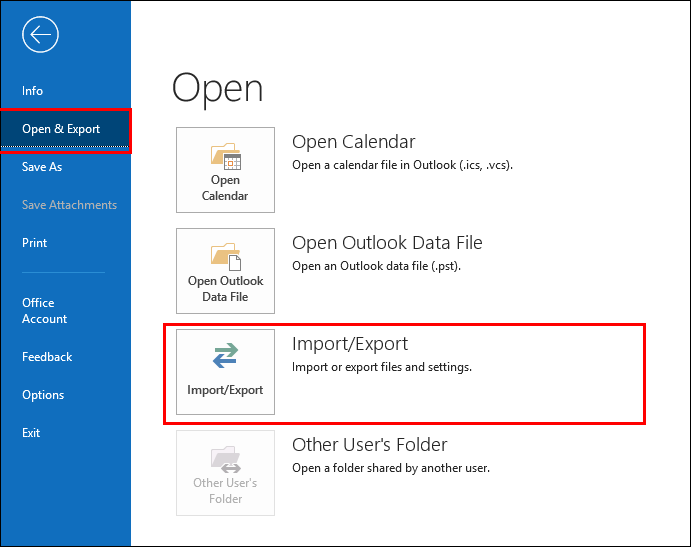
Step 2. Now click on Open & Export and select Import / Export.
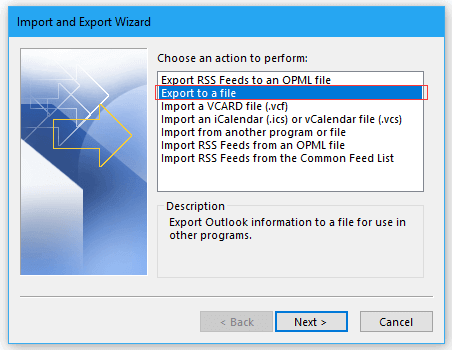
Step 3. Select the Export to a file option from Importa nd Export Wizard and click Next.
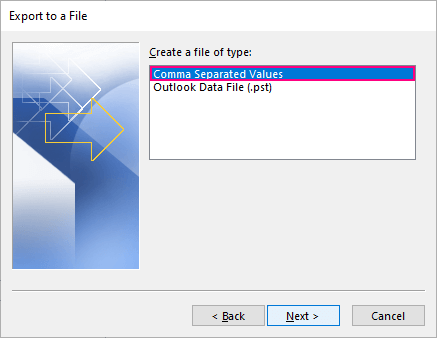
Step 4. Select Comma Separated Values (CSV) as the file type and click “Next”.
Step 5. Now select the Outlook Calendar folder to export and press Next.
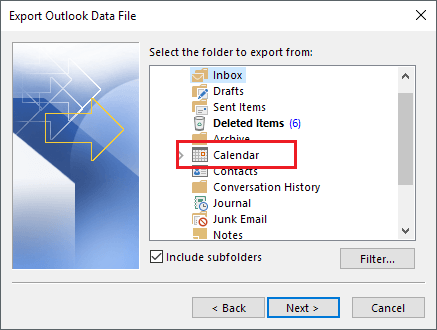
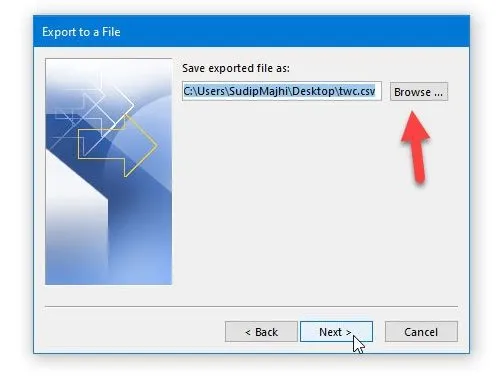
Step 6. Now you need to specify a storage location for your file.
Step 7. From next window, you can choose fields mapping as per requirement. You can also skip this step. Simply provide date range and press Finish button.
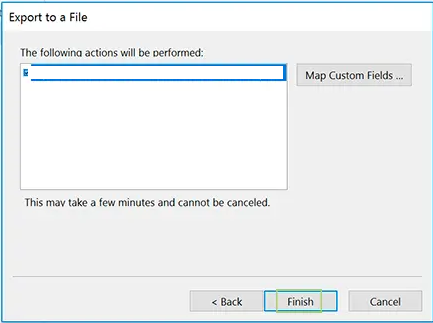
Now, Outlook will begin exporting calendar data. once exported, go the folder where you have chosen to save the resultant file.
Double click on it and open it in Excel.
Your file will be exported to the location you have selected in the previous step. Now open, view, and edit your exported file in Excel.
Can You Export New Outlook Calendar or from Outlook on the Web?
No. New Outlook for Windows and Outlook on the web do not provide the traditional CSV export option for calendars. So if you are trying to follow File -> Open & Export -> Import/Export -> Export to a file -> Comma Separated Value but cannot find them. You are likely using new Outlook rather than classic Outlook.
How to Switch to Classic Outlook?
If you are using New Outlook for Windows or Outlook on the Web, you can switch back to classic Outlook if the option is available in your installation.
- Open New Outlook on your Windows PC.
- Search for the New Outlook toggle in the upper right corner.
- Turn the toggle off.
- Outlook may ask why you are switching back. Select a reason and continue.
- Open Classic Outlook when prompted.
- Now go to File -> Open & Export -> Import/Export.
- Select Export to a File -> Comma Separated Values and choose your Calendar folder.
If you do not see the option to switch back, your Microsoft 365 or Outlook installation may be configured so that classic Outlook is not available. In that case, you cannot use the built-in CSV calendar export method from that Outlook interface.
In Short: New Outlook and Outlook on the web do not provide the same calendar-to-CSV export workflow as classic Outlook. If you need an Excel spreadsheet, use classic Outlook and export the calendar folder as a CSV file.
What the CSV Contains and How Excel Shows It?
The exported CSV contains calendar information in a tabular format. When you open the file in Excel, each appointment generally appears as a separate row, while individual properties appear in columns.
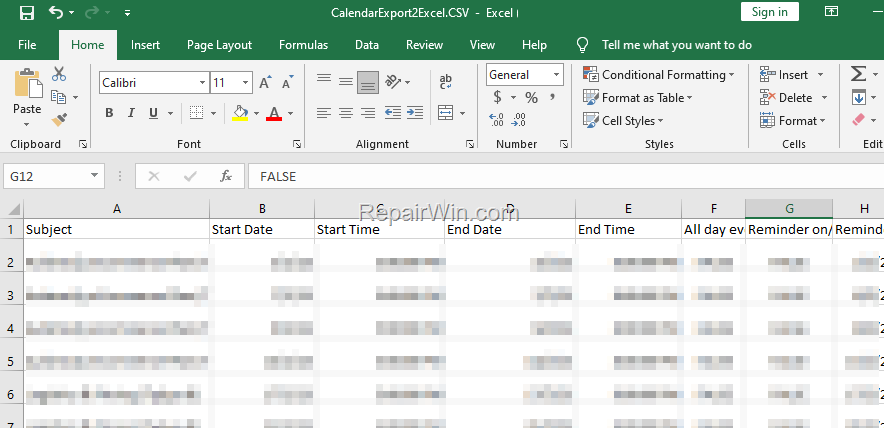
The exact columns can vary depending on the Outlook version and the calendar data being exported.
Once opened in Excel, you can sort events by date, filter appointments, remove unnecessary columns, create reports or save the file as .xlsx.
Only Have an Outlook PST File? What to Do
If your Outlook data is stored in a PST file and Outlook is not installed on your computer. You can still extract your calendar events without opening Outlook. Advik PST Converter can directly access Outlook data and extract calendar from PST file.
The tool gives you two ways to load the data. If the Outlook profile is available on the computer, you can let the software access the Outlook profile and load its mailbox data. Alternatively, if you already have a PST file, you can manually add the PST file to the program. This is useful when you have an old or archived PST file but do not want to install or configure Outlook just to download calendar information.
Additionally, with this utility, you can also export Outlook calendar to Office 365, Gmail and many file formats such as PDF, Word documents, etc.


Steps to Export Calendar from Outlook to Excel File
1. Launch the software on your Windows PC.
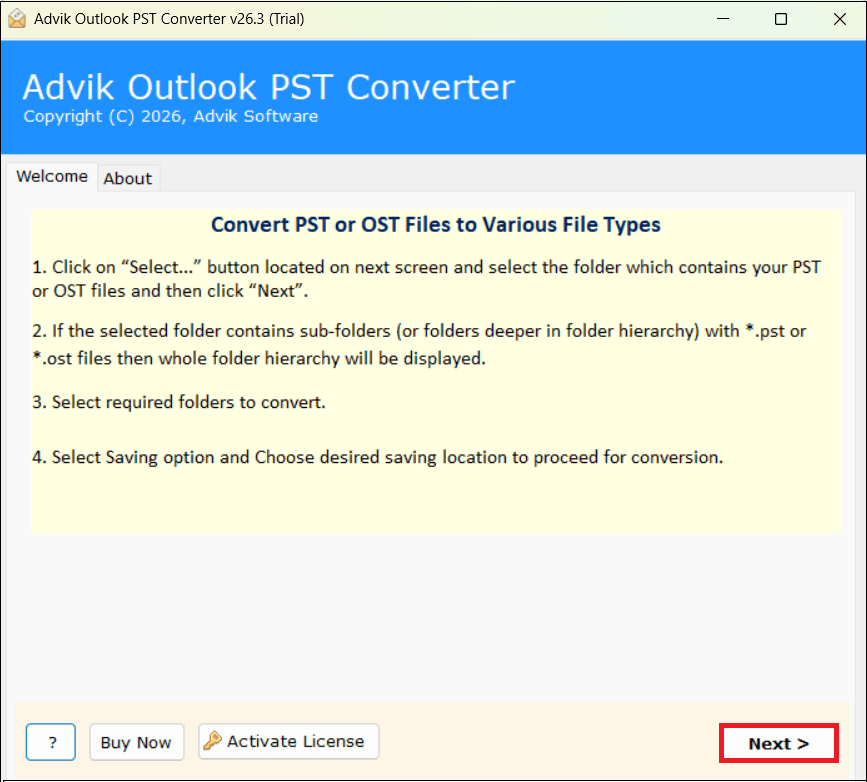
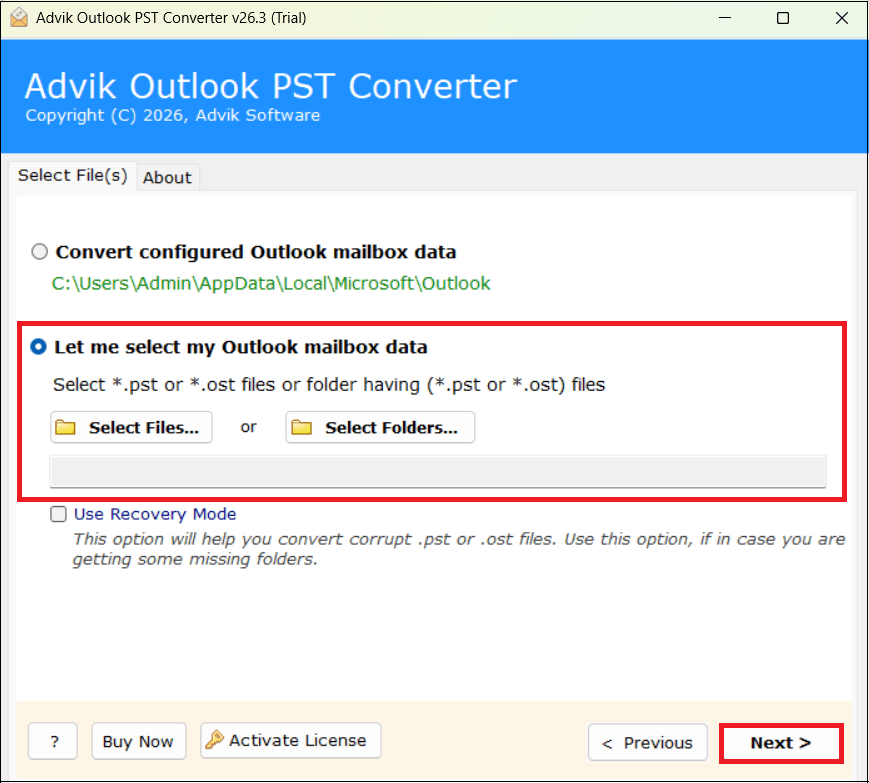
2. Select “Convert configured Outlook mailbox data” if Outlook is configured on your system or choose Select Files if the Outlook mailbox data in a PST file and then click on the Next button.
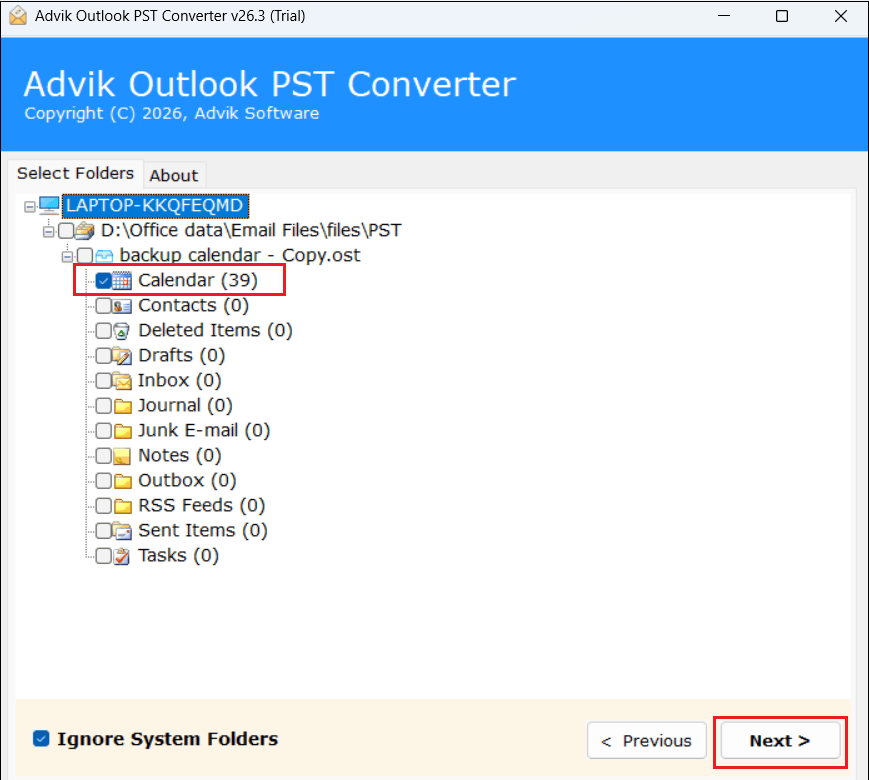
3. The software will display all mailbox folders, choose the calendar folder to export data and press Next.
4. Select CSV from the saving options.
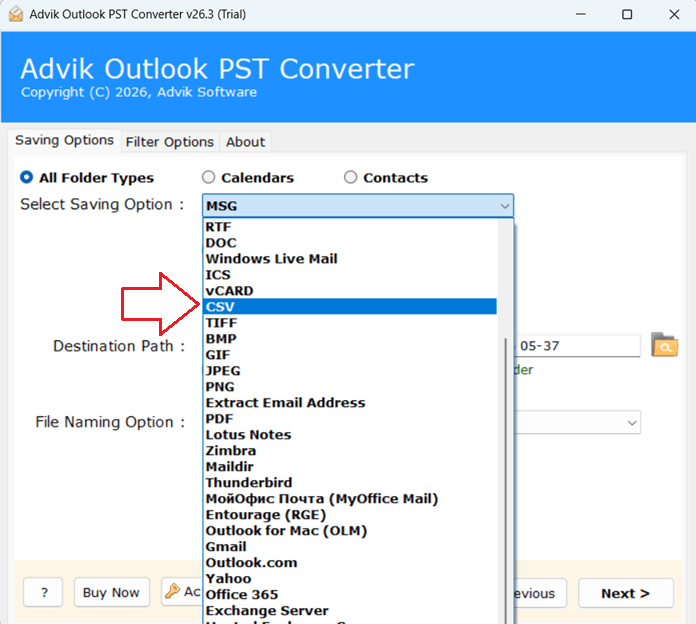
5. Choose your destination path & click on the Convert button.
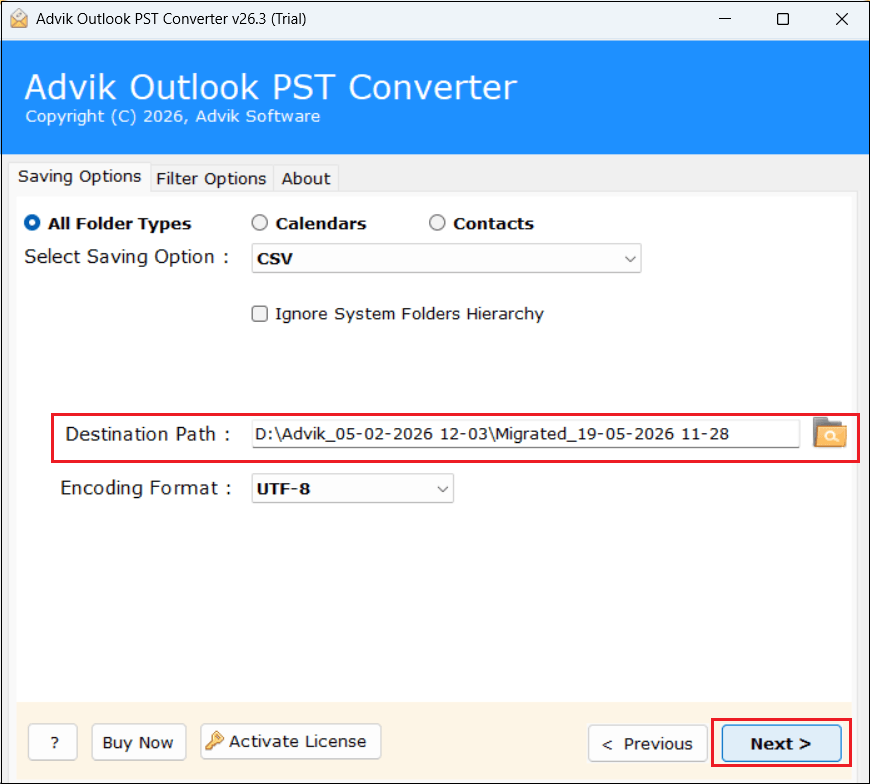
6. The software will start exporting calendar from Outlook to Excel CSV file.
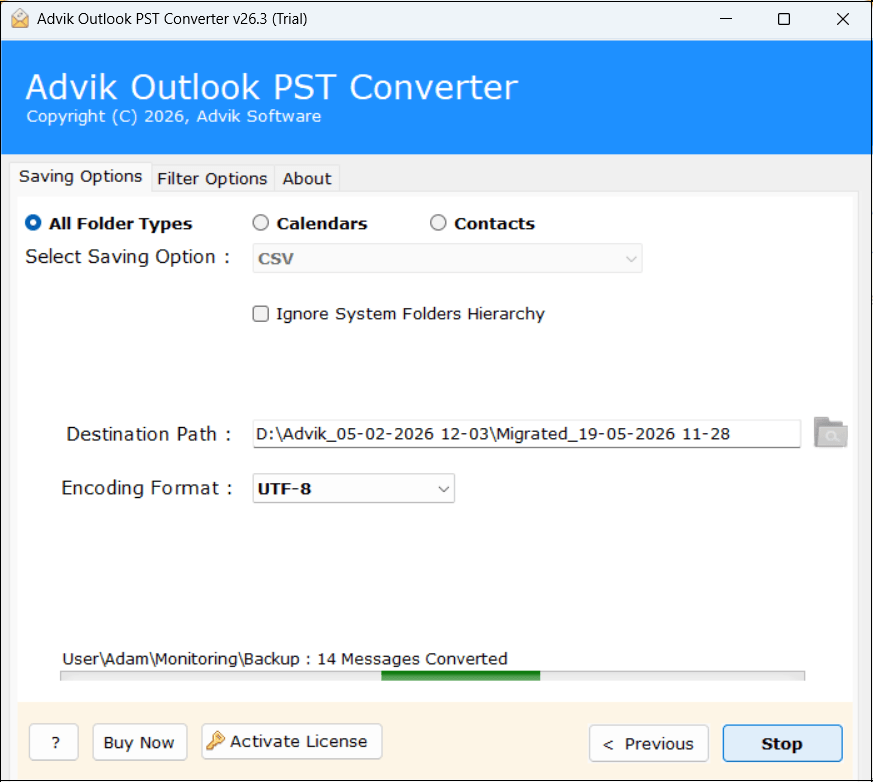
Take a look at your Outlook calendar, which is now exported in CSV file format. Open it in an Excel sheet in Windows 11/10.
Check the Exported Calendar Data
After exporting the calendar, do not immediately assume that the CSV contains everything you need. Open it in Excel and check several appointments from different dates.
For example, verify:
- The subject is present and readable
- Start and end dates are correct
- Start and end times have not been changed
- Locations are included where applicable
- Recurring events appear as expected
- All-day events are identified correctly
- The number of exported rows is reasonable compared with the original calendar
For a large calendar, compare appointments from the beginning, middle and end of the selected date range. This helps confirm that the export covered the intended period rather than checking only the first few rows.
Common Problems When Exporting Calendar from Outlook to Excel
#1. The Import/Export is Missing
Cause: You may be using New Outlook or Outlook on the web instead of classic Outlook
Fix: Open or switch to classic Outlook and use its Import/Export wizard.
#2. The CSV File is Empty
Cause: The wrong Calendar folder may have been selected or the chosen date range may not contain appointments.
Fix: Recheck the selected Calendar folder and enter a date range that contains known events.
#3. My Calendar Data is Not Showing Correctly in Excel
Cause: CSV files depend on regional settings and date/time formatting.
Fix: Open the CSV through Excel import process and verify the delimiter and date format before loading the data.
#4. Some Appointments are Missing
Cause: The selected date range may not include all required events.
Fix: Re-run the export with a wider date range and compare the result with the original Outlook calendar.
Conclusion
In this article, we have mentioned the top 2 ways to export Outlook calendar to Excel. Both methods are 100% workable. You can manually convert Outlook calendar to Excel, but if you face any issues with it, then go with the above-suggested tool. The software will easily export calendar from Outlook to Excel without any issues.
Frequently Asked Questions
Q1. Is there a way to automatically export Outlook calendar to Excel?
Ans. In classic Outlook, you can export calendar to CSV file manually and then open it in Excel. If your calendar data is stored in a PST file then use a PST Converter can also extract calendar data without relying on Outlook export wizard.
Q2. Can I export my Outlook calendar to Excel CSV for a specific date range?
Ans. Yes. Outlook provides the options to specify the start and end dates, allowing you to export only the required calendar period. Additionally, the software also offers filter options to extract calendar for a specific date range.
Q3. How do I open the exported calendar file in Excel?
Ans. After exporting your Outlook calendar to Excel, you simply need to open the file in Microsoft Excel to view and manage your data.